Pet hair works its way down into artificial turf fibers and gets tangled at the base near the backing, where a garden hose or a light brush simply can't reach it. Shedding season makes it worse fast – hair mats together with dirt and moisture and forms a dense layer that blocks drainage and holds odor against the surface. This is a different problem than surface debris, and it needs a different tool to fix properly.
You'll notice it as a gray or brown haze across the turf that doesn't rinse away, fibers that feel stiff or clumped even after cleaning, or visible hair buildup along the base of fences and edges where pets tend to shake off or rest. Heavy-shedding breeds and multi-pet households see this fastest, but even one dog in a yard they use daily will build up a noticeable hair layer within a few months.
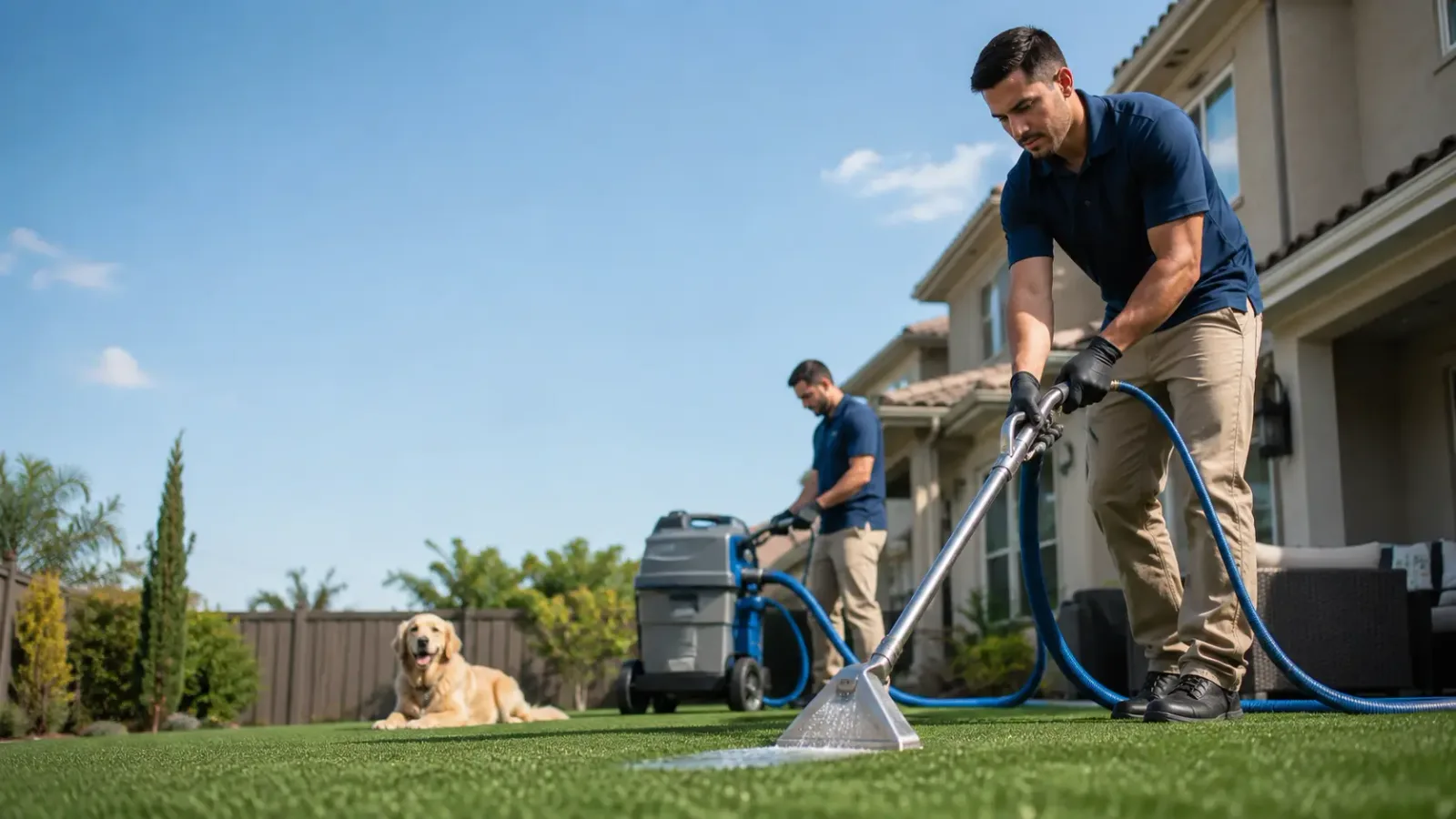
We use a combination of rubber-tined rakes and specialized turf vacuums designed to pull hair up and out without damaging or pulling on the turf fibers themselves – a regular vacuum or stiff metal rake can tear synthetic backing, so the right tool matters here. We work section by section, going against the grain to lift trapped hair to the surface, then extract it fully rather than just redistributing it. High-traffic areas and spots near fences or shaded corners, where pets tend to settle, usually need extra passes. Once the bulk is out, we do a final brush-through to confirm the base of the fibers is clear down to the backing.
Cost is driven mainly by how long it's been since the last hair removal and how many pets are shedding into the same space. A yard maintained on a regular schedule stays manageable; one that hasn't been addressed in East Waterford, PA for a long stretch, especially through a heavy shedding season, takes noticeably more time to fully clear.
If your turf feels matted or looks dull no matter how much you rinse it, embedded pet hair is usually the reason. Call (928) 427-2477 and we'll get it out properly.