Enzyme-based odor treatment targets the actual chemical cause of pet turf odor, not just the smell sitting on the surface. Dog and cat urine forms uric acid crystals as it dries, and those crystals lodge in the turf fibers and infill where regular rinsing can't reach them. When humidity or heat rises, the crystals reactivate and release the sharp ammonia smell homeowners know all too well. Enzymes work by biologically breaking those crystals down at a molecular level, actually eliminating the odor source instead of covering it up with fragrance.
You need this treatment if your yard smells fine right after rinsing but the odor comes right back within a day or two, especially on warm afternoons or after light rain. A strong ammonia smell that hits you before you're even close to the yard is a clear sign uric acid has built up significantly. Multi-dog households and yards used daily by the same pet in the same spots are the most common candidates, since urine concentration builds fastest in those repeated-use zones.
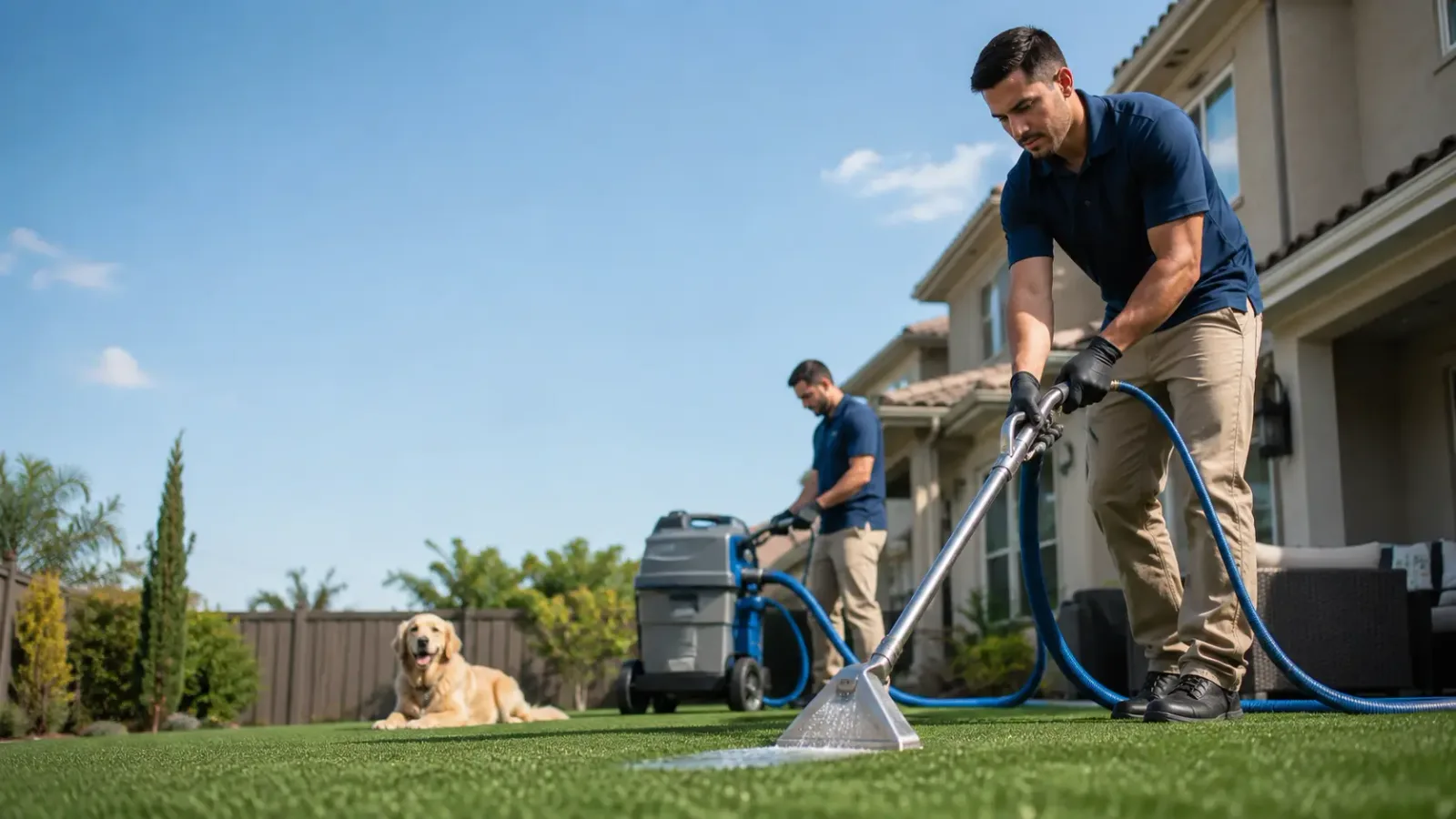
We apply a professional-grade enzyme solution formulated specifically for synthetic turf and pet urine, working it thoroughly into the fibers and down into the infill layer where the crystals actually sit – a surface spray alone won't reach deep enough to matter. The enzymes need proper dwell time to actually break down the uric acid, so we don't rush the rinse-off step, since that's what separates a real treatment from a quick masking spray. For heavily used zones, we often apply a second, more concentrated pass to make sure the treatment reaches saturation depth.
Cost depends on square footage, how many pets use the yard, and how long odor has been building up untreated – a yard in East Waterford, PA on a regular enzyme schedule needs lighter, quicker applications than one being treated for the first time after months of buildup.
Masking a smell isn't the same as removing it. Call (928) 427-2477 and we'll treat the actual source, not just the symptom.